
How to Plan Garage Storage So You Can Still Open Your Car Doors Comfortably
Key Takeaways
- Plan your garage storage layout around your parked vehicles and everyday movements.
- Test car doors, the trunk, and walking routes before ordering cabinets or shelves.
- Choose cabinet depth according to available clearance and the items you need to store.
- Wall storage saves floor space, but hooks, baskets, and equipment still project into the room.
- Garage Tailors can help plan storage around your garage, lifestyle, and parking needs.
How do you organize a garage without blocking car doors?
Organize a garage without blocking car doors by marking your vehicle’s parking position, testing how far the doors open, and keeping storage outside those movement areas. Place deeper cabinets where they leave enough clearance. Then use suitable wall storage for smaller items beside the vehicle.
A good garage storage layout lets you park, get out, carry groceries, and reach your belongings comfortably. For homeowners in Toronto, Mississauga, and across the GTA, planning these activities first can prevent a garage renovation that adds storage but makes parking difficult.
Start with your vehicle inside the garage
An empty garage can look much larger than it feels after parking. Therefore, begin with your actual vehicle in its usual position. If you park two cars, test the layout with both inside.
Open the driver and passenger doors slowly. Next, check the rear doors and trunk or liftgate. Notice where you stand when unloading shopping bags or helping a child into a seat. These movements reveal which areas need to remain clear.
Also, think about your next vehicle. If you expect to replace a compact car with an SUV, mention that during planning. A layout based only on today’s car may need changes later.
How much room should you leave beside a parked car?
There is no single clearance measurement that suits every vehicle and household. Door size, parking position, passenger needs, and storage projections all affect the space required.
Instead of relying on a general number, test the clearance you actually need. Someone carrying a baby seat may need more room than someone stepping out alone. Likewise, a person using a mobility aid needs a layout assessed around their particular access requirements.
Mark the tested areas with removable painter’s tape, if suitable for your floor. Use another tape line to show proposed cabinet fronts. This gives you a practical way to compare storage ideas before installation.
Choose garage cabinet depth carefully
Cabinets provide enclosed storage, but their depth affects parking and movement. A deep cabinet along the side wall may interfere with a car door. However, that same cabinet might work against the rear wall if vehicle length leaves sufficient space.
Start by listing what the cabinet must hold. Small tools and cleaning accessories may not need the same depth as bulky equipment. Then compare those requirements with the space available.
Remember to test cabinet doors and drawers too. A cabinet may fit when closed but become awkward to use with a vehicle parked beside it. Garage Tailors offers garage cabinet options in different dimensions, allowing storage choices to be discussed alongside the garage’s layout.
Use wall storage without creating new obstacles
Wall organization can free up the floor, especially for garden tools and frequently used accessories. Nevertheless, wall-mounted equipment still takes up space. A basket, bicycle handlebar, or shelf can extend into the area beside your vehicle.
Assess the depth of the loaded storage system, rather than the wall panel alone. Place flatter items near tighter areas. Meanwhile, reserve deeper storage for locations outside the car doors’ movement.
Keep frequently used items easy to reach. If you must squeeze past the vehicle every time you need a broom, reconsider its position. Convenient storage makes it easier to return items after use.
Protect walking routes and unloading space
A useful garage storage layout includes a clear route between the car and the house entrance. It also allows access to the garage’s other doors without stepping over bins or equipment.
Before finalizing the plan, walk through these tasks:
- Carry grocery bags from the vehicle to the house.
- Retrieve recycling bins without moving the car.
- Reach everyday tools with the vehicle parked.
- Open the trunk or liftgate without contacting storage.
- Move a stroller or other bulky item through the garage.
For two-car garages, consider whether both vehicles need the same access on each side. However, avoid solving one person’s parking problem by blocking another person’s route.
Plan seasonal storage separately
Seasonal belongings can occupy the best everyday access areas even when they are used only occasionally. Group decorations, camping supplies, and other seasonal items before deciding where they belong.
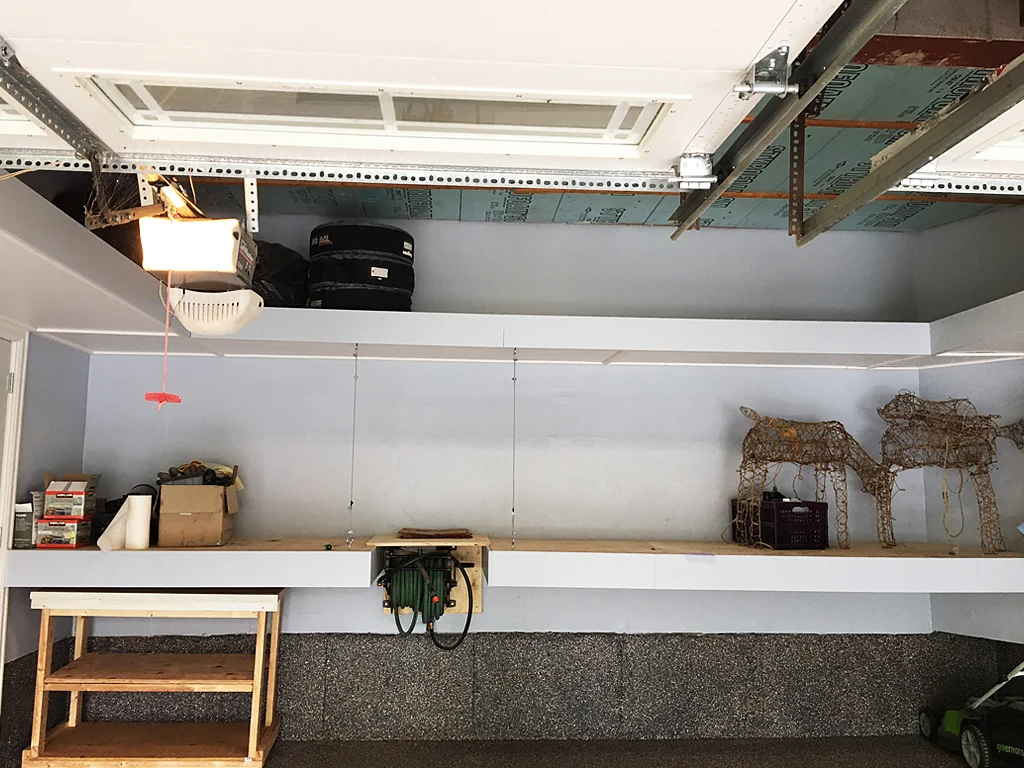
Overhead storage may be an option when the structure, load limits, and clearances allow it. Have the installer assess the garage door, its tracks, vehicle height, and access for loading. Do not assume unused ceiling space is automatically suitable.
Keep heavier or frequently used items where you can handle them comfortably. The goal is to make storage practical throughout the year.
How Garage Tailors helps you plan
Garage Tailors provides garage storage and renovation services through Nuvogarage.com. Its consultation process considers your organizational habits, priorities, and the purpose you want the garage to serve.
During your consultation, explain which vehicles you park, what you store, and where movement feels restricted. Discuss cabinets, wall organization, and overhead storage as parts of one plan. This helps match storage choices with the way your household uses the garage.
Frequently Asked Questions
Can I add cabinets to a small garage?
Yes, if the cabinet dimensions and placement leave enough room for parking and movement. Test the proposed depth with your vehicle inside before ordering.
Is wall storage always better than cabinets?
No. Wall storage suits visible, accessible items, while cabinets provide enclosed storage. The best choice depends on your belongings, available clearance, and preferences.
Should I measure with both cars parked?
Yes. In a two-car garage, test doors and walking routes with both vehicles in their normal positions. Measuring an empty garage can overlook conflicts.
Can overhead storage help protect car door clearance?
It can move suitable seasonal items away from side walls. However, installation requires checks of structural support, load limits, and clearance around vehicles and the garage door.
Where should I start with a garage storage layout?
Start by listing your belongings and testing vehicle access. Then book a free in-home consultation with Garage Tailors to discuss a layout that suits your parking and storage needs.